Monday, June 01, 2009

Morphine, Head with Wings

A Head With Wings Lyrics

I got a head with wings (x3)
And I can see so far away I can see so clear
You would not believe the view up hear
I got a head with wings
A head with wings
Now I'm floating around up here way above the clouds
So high about the ground
And the only thing that holds my head to the ground
Is this one little skinny string
I got a head with wings
A head with wings
I got a head with yea oh
A head with wings
I got a head with wings (x3)
And I can see so far away yea so far away
I can see the shadows fall across your face
I got a head with wings
A head with wings
I got a head with yea yea
A head with wings (x2)
Yea (x2)

-----------------------

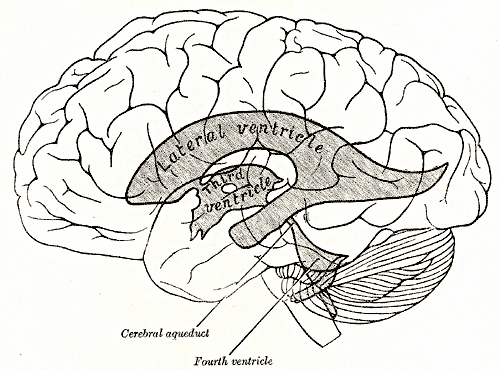
Early this week, I discovered the alleged occult significance of the third ventricle of the brain plus the two lateral ventricles. This brain structure looks like a head (the third) with two wings (the laterals) coming out of it. I googled "head with wings" and got this song by Morphine -- I think they saw what I saw. I think the mythical figure of Pegasus also symbolizes the third ventricle plus the two lateral ventricles -- especially because Pegasus is depicted as being ridden by Poseidon, who is the watery power of mind (Jove/Jupiter) -- this is important because the ventricles are filled with "liquid mind", i.e., the cerebro-spinal fluid. Davinci, and others, have apparently claimed that the third ventricle especially is the place of the "community of the senses", i.e., where all sensory information comes together and is integrated to form "experience". Manly P. Hall claims that the thin membrane between the lateral and third ventricles, the tela choroidae, may be a type of "ear drum" of the brain via which experience on the objective or physical realm is communicated to the mind body of man, existing outside of his body (if you believe in such things -- c.f. Manly P. Hall's "Man, Symbol of the Mysteries"). Note the song lyric, "And the only thing that holds my head to the ground is this one little skinny string." The skinny string may be the spinal cord itself which is the extension of mind/brain into body, and the only thing that keeps us rooted to "the ground" -- i.e., the material plane of experience.

Photo from Wikipedia

Sunday, May 31, 2009

Avichi

This is the Theosophist concept of hell, which is derived from the Sanskrit for "isolation." Although a place of torment it greatly differs from the ordinary conception of hell, chiefly because those who reside there have no physical bodies with which to satisfy the fleshy desires that they are plagued with.

The Theosophical teaching on which Avichi is based is the conception that people remain the same entity after death as they were before dying. That is, if in life a person was possessed by strong passions and desires then he will retain them in the astral world. The desires then become unsatisfying with a physic body and turn into anguished torments.

The manner of torments seems to be infinite varying from the confirmed sensualist struggling with his desire of the flesh to the ordinary person, while not burden be fleshy desires, who is troubled by the thought that he gave too much attention in his earthly life to worldly affairs rather than focusing on higher goals. This latter person is thus doomed to regret his lack of attention toward higher objectives.

Avich is a place of regrets for things done and left undone in the physical life. Its torments, however, are not eternal, but will gradually subside after timeless durations of anguished torment.
A.G.H.

http://www.themystica.com/mystica/articles/a/avichi.html

Livin' La Vida Loka

Kama-loka: Spiritual - Theosophy Dictionary on Kama-loka

Kama-loka (Sanskrit) (from kama desire + loka world, sphere)

Desire world; a semi-material plane, subjective and invisible to us, the astral region penetrating and surrounding the earth. It is the original of the Christian purgatory, where the soul undergoes purification from its evil deeds and the material side of its nature. It is equivalent to the Hades of the Greeks and the Amenti of the Egyptians, the land of Silent Shadows.

Kama-loka is the abode of the disimbodied astral forms called kama-rupas and of the still highly vitalized astral entities who quit physical existence as suicides and executed criminals who, thus violently hurled out of their bodies before the term of natural death, are as fully alive as ever they were on earth, lacking only the physical body and its linga-sarira. In addition the kama-loka contains elementaries and lost souls tending to avichi. All these entities remain in kama-loka until they fade out from it by the complete exhaustion of the effects of the mental and emotional impulses that created these eidolons of human and animal passions and desires. The second death takes place in kama-loka, after the upper duad frees itself of the lower, material human elements before entering devachan.

"If, contrariwise, the entity in the kama-loka is so heavy with evil and is so strongly attracted to earth-spheres that the influence of the monad cannot withdraw the Reincarnating Ego from the Kama-rupa, then the latter with its befouled 'soul' sinks lower and lower and may ever enter the Avichi. If the influence of the monad succeeds, as it usually does, in bringing about the 'second death,' then the kama-rupa becomes a mere phantom or kama-rupic spook, and begins instantly to decay and finally vanishes away, its component life-atoms pursuing each one the road whither its attractions draw it" (OG 76). The highest regions of kama-loka blend into the lowest regions of devachan, while the grossest and lowest regions of kama-loka bend into the highest regions of avichi.

(See also: Kama-loka, Mysticism, Mysticism Dictionary, Occultism, Occultism Dictionary)

http://www.experiencefestival.com/kama-loka

Thursday, May 28, 2009

Jordan Rubin

This naturopath/singer taught me, with his "Maker's Diet" much of what I have come to know about diet and human health. In his books he never speaks of the bodies higher than the physical and, perhaps like most Christians, he does not know the difference between soul and spirit. I strongly doubt, Christian as he is, that he believes in the fact of reincarnation, therefore he probably believes that his body has a soul rather than the other way around (which is the reality) -- but in spite of his rather materialist bent, he is still an inspiration to me, and I learned much about health from him.

Thursday, May 14, 2009

Coleridge, The Ancient Mariner (Introduction)

Facile credo, plures esse Naturas invisibiles quam visibiles in rerum universitate. Sed horum omnium familiam quis nobis enarrabit ? et gradus et cognationes et discrimina et singulorum munera ? Quid agunt ? quae loca habitant ? Harum rerum notitiam semper ambivit ingenium humanum, nunquam attigit. Juvat, interea, non diffiteor, quandoque in animo, tanquam in tabulâ, majoris et melioris mundi imaginem contemplari : ne mens assuefacta hodiernae vitae minutiis se contrahat nimis, et tota subsidat in pusillas cogitationes. Sed veritati interea invigilandum est, modusque servandus, ut certa ab incertis, diem a nocte, distinguamus. - T. Burnet, Archaeol. Phil., p. 68 (slightly edited by Coleridge).

I can easily believe, that there are more invisible than visible
Beings in the universe. But who shall describe for us their
families? and their ranks and relationships and distinguishing
features and functions? What they do? where they live? The human
mind has always circled around a knowledge of these things, never
attaining it. I do not doubt, however, that it is sometimes
beneficial to contemplate, in thought, as in a Picture, the image
of a greater and better world; lest the intellect, habituated to
the trivia of daily life, may contract itself too much, and wholly
sink into trifles. But at the same time we must be vigilant for
truth, and maintain proportion, that we may distinguish certain
from uncertain, day from night.

The Impossible Dream


To dream the impossible dream
To fight the unbeatable foe
To bear with unbearable sorrow
To run where the brave dare not go

To right the unrightable wrong
To love pure and chaste from afar
To try when your arms are too weary
To reach the unreachable star

This is my quest
To follow that star
No matter how hopeless
No matter how far

To fight for the right
Without question or pause
To be willing to march into Hell
For a heavenly cause

And I know if I'll only be true
To this glorious quest
That my heart will lie peaceful and calm
When I'm laid to my rest

And the world will be better for this
That one man, scorned and covered with scars
Still strove with his last ounce of courage
To reach the unreachable star

Wednesday, May 06, 2009

What is Energy?

Does anybody really know what energy is? The famous American Physicist Richard Feynman talked about it in his famous 1960s Lectures on physics “ …In Physics today, we have no knowledge of what energy really IS!”

We know energy through its manifestations in different forms: heat, magnetism, electricity… etc. We know how to use certain formulas to quantify and use the different forms of energy, that ultimately gave us modern technology, but we still do not know the essence of the energy that can take one form or another.

The general scientific definition from the Encyclopedia Britannica: “ENERGY IS THE ABILITY TO PRODUCE ACTION OR EFFECT” defines energy not in what it really is but through one of its attributes. Besides the traditional types of manifestation of Energy in form of heat, motion…etc, many other ‘effects’ can actually be defined as manifestations of energy. We must include vitality, emotions, and thoughts, into the energy repertoire. A whole new picture arises which would need a whole new Physics to grasp it.

From Biogeometry.com

Tuesday, April 14, 2009

Observing Auras

There are 4 basic elements of life,
Earth , Air, Fire, Water.
Contact with all 4 of these elements restores balance to your body.
Sitting under a willow tree for 10 minutes can stop a headache.
A pine tree can help cleanse you.
Each Tree is as unique and individual as we each are.
Trees have dynamic energy fields, and each has their own vibration,
as do we, and also as do crystals.
Trees absorb and draw off negative emotions from our own auras.
This does not harm the tree.
It turns our negative energy into fertilizer for itself.


Link

Friday, March 27, 2009

Iamblichus, Theurgia

In all theurgic rites there is a double character put forward; the one as a human being, the other as participating of a superior nature and exalted to the order of divinities. In the former, the priest makes the invocation as a man and supplicates the superior beings; in the other, he commands the powers of the universe, for through the ineffable symbols, he is in some manner invested with the sacred character of the gods.

Iamblichus, Theurgia

Wednesday, March 25, 2009

Growth

Growth is the continual experience of higher forms of unity.

Tuesday, March 24, 2009

Behold Truth

Man does not behold truth for fear of the discovery that he, himself, is a lie.

Friday, March 20, 2009

Math and Myth

This is an update of my previous definitions of math and myth. It's interesting to see the progress of my definitions over time.

Mathematics is the journey from matter to spirit.

Myth is the record of the sequence of events along that journey.

A Way Back

The universe is a fact.

Or is it?

Perhaps it is rather an eventuality -- an eventuality of certain facts or principles upon which it stands.

Science is an endeavor to gain understanding -- precisely the study of what stands under this eventuality we call the universe. The universe is then seen as an eventuality of certain ethereal principles that have no basis in the reality accessible through our 5 senses.

For example, "extension" is known as "line" and has no counterpart in 5-sense experience. It is rather a principle, a fact, and because it is a fact, it is actually more real than any material object -- because it is a cause of, rather than an effect of, the sphere of existence called matter.

"Singularity" is known as "point" and has no counterpart in 5 sense experience. It is, rather, a principle, a fact, and because it is a fact it is actually more real than any of its effects in the sphere of existence called matter.

Wednesday, March 18, 2009

Math is Myth

I do not mean that mathematics should be discredited -- quite the contrary.

Mathematics is the philosophic contemplation of sublime truths.

Mythology is the objectification of man's inner life, his inner experience.

Both consequently involve the unfolding of man's spiritual self into his conscious awareness -- the very point and purpose of human life.

Math is myth.

Monday, March 16, 2009

Questions

What if we're actually 'bigger' than our conscious minds?

What if we're actually 'bigger' than our physical bodies?

In other words, what if these realities are only a PART of who we are?

If so, the rapture of the theatre, of music, even of a good T.V. program, would represent a welcome repose from our conscious minds.

If so, then sleep, one of our most vital daily rituals, would represent a welcome repose from the equally encumbering influence of our physical bodies.

Sunday, March 15, 2009

Jesus: Who Understands These?

Matthew 10:34-39
"Do not think that I came to bring peace on the earth; I did not come to bring peace, but a sword. For I came to set a man against his father, and a daughter against her mother, and a daughter-in-law against her mother-in-law; and a man’s enemies will be the members of his household. He who loves father or mother more than Me is not worthy of Me; and he who loves son or daughter more than Me is not worthy of Me. And he who does not take his cross and follow after Me is not worthy of Me. He who has found his life will lose it, and he who has lost his life for My sake will find it."
Luke 22:36

He that hath no sword, let him sell his garment, and buy one.

Monday, February 16, 2009

The Legacy of Charles Fort

Link

David Icke on Nature of Money

William Paley

"There is a principle which is a bar against all information, which is proof against all arguments and which cannot fail to keep a man in everlasting ignorance — that principle is contempt prior to investigation."

William Paley

Saturday, February 14, 2009

William P Hamilton on Dow Theory

"Study of the averages is based on 'Dow's theory', propounded by the late Charles H. Dow, the founder of this newspaper. The books which published that theory seem to be out of print; but briefly it was this: Simultaneously in any broad stock market there are -- acting, reacting, and interacting -- three definite movements. That on the surface is the daily fluctuation; the second is a briefer movement typified by the reaction in a bull market or the sharp recovery in a bear market which has been oversold; the third and main movement is that which decides the trend over a period of many months, or the main true movement of the market.

"It is with these facts well in mind that the student approaches analysis of the averages, premising that broad conclusions are valueless on the daily fluctuation and deceptive on the secondary movement, but possible and helpful on the main movement of the market, and of real barometrical value to general business. It may be said as a matter of record that studies in the price movement, with these facts well in view, published in these columns from time to time and especially in the years before the war, were far oftener right than wrong, and were wrong for the most part when theyt departed from Dow's sound and scientific rule."

William Peter Hamilton, Aug. 1919 Wall Street Journal Editorial

Techinical Analysis Defined

The idea that market trends can be anticipated by analysing the actual activity of investors is the central tenet of the trading discipline known as 'technical analysis.'

Tony Plummer, Forecasting Financial Markets

Wednesday, February 11, 2009

John Murphy on Elliott Wave Theory

There are three important aspects of wave theory -- pattern, ratio, and time -- in that order of importance. Pattern refers to the wave patterns or formations that comprise the most important element of the theory. Ratio analysis is useful in determining retracement points and price objectives by measuring the relationships between the different waves. Finally, time relationships also exist and can be used to confirm the wave patterns and ratios, but are considered by some Elliotticians to be less reliable in market forecasting.

....

The numbers shown so far 1,2,3,5,8,13,21,34,55,89,144 -- are not just random numbers. They are part of the Fibonacci number sequence, which forms the mathematical basis for the Elliott Wave Theory.

John Murphy, Technical Analysis of the Financial Markets

Bassetti on the Broad Market Trend

Numerous averages and indexes have come online since the 5th edition: S&P 100, S&P 500, Russell 200, and so on. It would be an exercise in daily journalism to attempt to list all the indexes now available. New ones spring up like wees after the spring rain. This is because the invention of a widely adopted index can be very lucrative for its creator. S&P and Dow Jones collect licensing fees from the "use" of their indexes by the exchanges. The constant addition of new trading instruments requires that current lists be kept in Resources, and the reader may also consult The Wall Street Journal, Barron's, and The Investor's Business Daily where prices of indexes and averages are reported. Online brokerages and financial news sites also offer up to the minute lists and quotes on virtually all trading instruments. A list and links to these sites may also be found in Resources (Appendix D) and at edwards-magee.com. As of the turn of the century, the most important of these indexes, joining Dow, are probably the S&P 500, and the NASDAQ. In fact these are probably sufficient for economic analysis and forecasting purposes, and certainly good trading vehicles by means of surrogate instruments, options, and futures. Some would include the Russell 2000 in this list. These indexes and averages have been created to fill needs not filled adequately by the Dow Jones Averages.

With this proliferation of measures of the market and various parts of it, a different question arises. That is, the value of the Dow alone in indicating the Broad Market Trend is now questionable. Limited research has been done on this question. It is, however, my opinion that the Broad Market Trend must now be determined by examining the Dow Industrials, the S&P 500, and the NASDAQ.

Bassetti, Technical Analysis of Stock Trends

Monday, February 09, 2009

Robert Fischer on RN Elliot

For 50 years, RN Elliot has remained a legend for legions of analysts. Without his ideas, this book could never have been written. His brilliant deductions include:

  • Market swings are a reflection of human behavior.
  • Human behavior can be related to a phenomenon of nature.
  • Nature's law can be measured by using the Fibonacci summation series.

From his findings, published in The Wave Principle, Elliot claims that he can forecast price movements.

Robert Fischer, Fibonacci Applications and Strategies for Traders

Edwards and Magee on the Primacy of the Trend

One of our basic tenets in this system of technical stock chart analysis -- indeed, a fact which any neophyte can quickly verify for himself by inspection of the market records for whatever period he chooses -- is that prices move in trends. The market in general, and the many stocks which compose it, do not jump up and down in an altogether random fashion; on the contrary, they show definite organization and pattern in their charted course.

Prices move in trends.

Edwards and Magee, Technical Analysis of Stock Trends

William Peter Hamilton, October 25, 1929

There are people in Wall Street, and many all over the country, who have never seen a real bear market .... What is more material is that the stock market does forecast the general business of the country. The big bull market was confirmed by six years of prosperity and if the stock market takes the other direction there will be a contraction in business later ....

William Peter Hamilton, October 25, 1929

Sunday, February 08, 2009

Tony Plummer, Forecasting Financial Markets

The recognition that people do not always act rationally, and do not always make decisions independently of one another, necessitated a shift in the way I approached the markets. However, it was quite clear that there was no central body of literature to which I could turn. So, within a few weeks, I began my own process of collecting ideas and related information, and in 1989 ... the resulting understandings found expression in the first edition of this book. Since then, there has been an explosion of literature from authors such as Howard Bloom (The Lucifer Principle, 1995, and Global Brain, 2000) that substantially validates my conclusions about the pervasive influence of crowd psychology. Economic man, who makes decisions on the basis of 'rational expectations' is not only a travesty of a human being, but an impossible construct. For good and for ill, human beings are literally programmed to coexist, cooperate and correlate with one another. Such relationships validate us and stimulate our emotional life.

This, in itself, is very important for our understanding of financial and economic behavior. By definition, once people start to group together, behaviour within the context of the group becomes non-random. This is why -- despite what some statisticians may say -- financial market price action has a non-random dimension. But this is not all. Somewhat startlingly to someone who recognizes it for the first time, market price action persistently expresses itself in a three wave pattern that mirrors the processes of learning, and of energy absorption in living organisms. The crowd, in other words, is not different to other parts of Nature. As such, it is intrinsically predictable.

Tony Plummer, Forecasting Financial Markets

Euclid's Triangle Definitions

[I was struck yesterday, perhaps the day before, while reading from Robert Rhea's "The Dow Theory" how useful the "axiom-theorem" organization of knowledge in any field can be -- and not necessarily in mathematics alone. I looked at Euclid's Elements in a new light -- it represents the first successful attempt at such an organization. Although it might be ridiculous, I've decided to enter a few simple but powerful axioms and theorems from The Elements. In this case, simply a few definitions.]

Of trilateral figures, an equilateral triangle is that which has its three sides equal, an isosceles triangle that which has two of its sides alone equal, and a scalene triangle that which has its three sides unequal.

Further, of trilateral figures, a right-angled triangle is that which has a right angle, an obtuse-angled triangle that which has an obtuse angle, and an acute-angled triangle that which has its three sides acute.

Brian Millard on Fundamental vs. Technical Analysis

There are two schools of thought on price movement and how to predict it. The fundamentalists believe the way to make a successful investment is to concentrate on methods of determining the value of a company. This is done by studying the way that it is managed, the various financial statements emanating from the company, the markets in which its products are being sold, comparisons with other companies operating in the same field, and so on. On the other hand, technical analysts base their predictions on historic price movement, although most of them would agree that there is some value in the fundamental approach. The technical analysts are of the opinion that the positive and negative aspects of a company are reflected in the stock price, and that a lot of unnecessary effort in studying the fundamentals can be avoided if you carry out the correct price analysis.

...

The difficulty with the fundamental approach is that the investor might have to wait a long time before realizing a profit. Although you discover that a company is undervalued, and that its stock price ought to be much higher, and until other investors come to the same conclusion, the price cannot expect to move down in the required direction. This composite view of investors towards the company is not being measured by an analysis of the fundamentals. However, technical analysis correctly applied will give a reasonable indication that the weight of outside opinion about the company is either optimistic, pessimistic or neutral. From that knowledge the investor can determine wither to buy, sell, or do nothing. Of course, opinions about a stock, sector, or market can change rapidly, leaving the investor to base his decision on outdated materials. By giving the investor an early warning sign technical analysis is subjected to the severest test.

Some technical analysis methods are far too simplistic. In their most trivial form they come down to a set of rules that should be obeyed without any understanding of the meaning behind them. Typical of such rules are those of the form 'buy when the stock price rises above the x-day moving average' or 'sell when the y-day average falls below the x-day average,' where x and y depend upon which technician you are speaking to. The difficulty with rules such as these is that they may have been formulated for a market quite different from that in which tey are being applied. It is only when the investor starts to ask what lies behind these rules that an understanding begins to develop. This understanding is invaluable in deciding whether or not the current market is the type in which these rules should be applied.

Brian Millard, Channels and Cycles, A Tribute to JM Hurst

Brian Millard on JM Hurst

If I had any criticism of the book at all [The Profit Magic of Stock Transaction Timing by JM Hurst], it was simply that the average investor, picking it up and quickly scanning through its pages, would perhaps feel that it was too mathematically orientated, and replace it on the shelf, because it contained terms such as Fourier Analysis and modulated side-bands, etc. The investor would then be missing an important contribution to the subject of technical analysis. However, a reader who took the trouble to study the book in depth would grasp that Hurst's work was based on five main concepts. These were:

  1. Maximum profits are obtained from shorter trades
  2. Some 23% of price motion is based on cyclic movements in nature
  3. These cycles are additive
  4. The cycles can be seen clearly if envelopes are constructed around the price movement
  5. The ideal buying point is when several such cyclic components are reaching their low points
Brian Millard, Channels and Cycles: A Tribute to JM Hurst

Hugh Bancroft on Dow Theory

It is hard to realize that little over thirty years ago, Dow was presenting a radically novel idea, when he showed that beneath the fluctuations in individual stocks there was present at all times a trend of the market as a whole. Until then people who thought about such matters at all generally assumed that fluctuations in the prices of stocks were individual and unrelated, dependent entirely on the circumstances of the particular company and the current attitutde of those speculators who chose to trade in each particular stock.

Hugh Bancroft (May 21, 1932)

Thursday, February 05, 2009

Frost and Prechter on Dow Theory

According to Charles H. Dow, the primary trend of the market is the broad, all-engulfing 'tide,' which is interrupted by 'waves,' or secondary reactions and rallies. Movements of smaller size are the 'ripples' on the waves. The latter are generally unimportant unless a line (defined as a sideways structure lasting at least three weeks and occurring within a price range of five percent) is formed. The main tools of the theory are the Transportation Average (formerly the Rail Average) and the Industrial Average. The leading exponents of Dow's theory, William Peter Hamilton, Robert Rhea, Richard Russell, and E. George Schaefer, rounded out Dow's theory but never altered its basic tenets.

Frost and Prechter, Elliot Wave Principle

Bill Poulos from Profits Run

Sound Advice!

I'm a bit leery about Bill Poulos' "Market Mastery Program" and, no doubt, the above article is a marketing ploy on the part of him and my beloved MarketClub. Nevertheless, the article represents the first mention I've heard that there may be a demand, rather than a lack thereof, for technical traders as markets continue to consolidate/decline in the coming years. I thought it was worth listing on my blog, for that very reason.

Wednesday, February 04, 2009

Le Beau and Lucas

Here's another book I've been contemplating -- outside of the general curriculum I'm following.


Monday, February 02, 2009

Bruce Babcock, Worth the Investment?

I'm wondering whether I should invest in Babcock's book:


Hewison seems to endorse him re: his method of using the ADX indicator, and I was struck by this review by an amazom.com reader.

Hewison on Point and Figure Charting

There are a few good pointers here -- in one of Hewison's email lessons on trading.

Point and Figure Charts

Sunday, February 01, 2009

KC Zieg on Point and Figure Buy and Sell Signals

There are eight basic buy and eight basic sell signals used in point and figure charting. The first two buy signals, referred to as the Simple Buy Signals and comprised of three or four columns, play a dual role of determining the price level at which shorts must be covered as well as signaling the opportunity for the establishment of new long positions. The more complex buy signals, all comprised of five or more columns and all containing one or more of the simple signals within their structure, permit the establishment of long positions but are not used to close out shorts for short positions are always covered on simple signals.

The Simple Sell Signals covering three or four columns always signal the need for liquidation of long positions as well as suggest the possibility of a short sale.

The more complex sell signals, more correctly termed short-sale signals, contain more columns of reversals and one or more of the simple sell formations. These complex formations are not used to close longs, for the simple signals accomplish this but are strong indicators that the short side is the correct side of the market to trade.

Statistics are provided [in the chapter] to show the frequency of signal occurrences, the duration of commitments, and the profitability in stock trading when fifteen of the sixteen simple and complex formations are used as entry criteria.

In answer to the question, "Which signal is best?" the trading media is important. Commodity traders have little or no choice of formations because only B-1, B-2, S-1, and S-2 signals occur with any frequency. But security traders have all sixteen formations available.

The one or more formations best suited for a security trader is dependent on the amount of investable funds available and the desired holding period of the open trade. Only through a careful analysis of these two personal requirements coupled with a searching analysis of the statistics cited can the most appropriate formations be discovered.

KC Zieg, Point and Figure Commodity and Stock Trading Techniques (Chapter 3 Summary and Conclusion)

Friday, January 30, 2009

Richard Russell on Dow Theory

Periodically, after crucial and unexpected turns in the market, the study of Dow Theory gains renewed attention from the public. Because a handful of Dow Theorists correctly interpreted last year's reaction and also predicted this year's historic advance, a good deal of interest has been revived today in this oldest and most indispensable method of forecasting price movements and economic trends.

Now just what is the Dow Theory? Basically, it is a system based on the premise that the closing prices of the Dow-Jones Industrial and Rail Averages give us a complete index of all the knowledge, hopes and fears of everybody who knows anything about financial matters. Each investor, acting on what he knows of his own business and the economy, is represented in an emotionless balance which we call the Averages. For this reason, the effects of coming events (excluding acts of God) always are anticipated by the movements of these two indicators.

Talleyrand, the famous French foreign minister, once remarked: "I know somebody that knows more than anybody, and that is everybody." Financially speaking, that "everybody" is the market. When the majority of informed opinion feels that factors favorable to business are in the offing, stocks are purchased and the market advances. Conversely, when informed opinion feels that conditions are deteriorating, cash is preferred to equity and stocks are sold, thus touching off a decline.

Richard Russell, The Dow Theory Today (December 1, 1958 article)

[Here is another quote from the same book pertaining to this subject]

The basic premise of the Theory is that the averages discount everything. The closing prices of the Dow Jones rail and industrial averages give us a complete index of everything known by anybody that can possibly affect the economy and corporate profits (excluding acts of God). "Consciously or unconsciously, the movements of prices reflect not the past but the future. When coming events cast their shadows before, the shadows fall on the New York Stock Exchange." (Hamilton)

Richard Russell, The Dow Theory Today (February 16, 1959 article)

[Another great quote from same book]

In determining the trend, it is never to be forgotten that the movements of both averages must be considered together. The movement of one average must always confirm the other (although not necessarily on the same day), and conclusions drawn from the action of one average unconfirmed by the other are usually deceptive. The confirmation principle is based on logic. If there is to be a valid increase in manufacturing and production, there will also be an accompanying increase in shipping and transportation. Goods produced, if they are not to sit idly in the warehouses, must be distributed to their destinations. If distribution occurs, some of it will be by rail. Regardless of the fact that other forms of transportation are now competing with the rails, an increase in shipping must affect the rails to some favorable extent. It is not necessary for the rail average to move to new highs in each succeeding bull market, but within a given bull market rails must merely advance above preceding high points to confirm.


Richard Russell, The Dow Theory Today (February 16, 1959 article)

Wednesday, January 28, 2009

KC Zieg on Fundamental Analysis

Investing involves a very limited number of decisions:

What stock (futures contract, equity option, index option, or other item) should I buy?
When should I buy it?
Having purchased it, where should I sell it?

To be a successful investor, one needs to do more than just select the best stocks or commodities to own. They must be purchased correctly. The investor must then employ appropriate exit strategies to stop losses and let profits run.

Most investors, investment services, newsletters, advisors, and brokerage firms select stocks to purchase through the use of fundamental analysis. Fundamental analysis involves the study of the quality of the company, its sales, earnings, management, and other factors relating to how the company has recently performed, how it should fair in the future and how it compares with other firms within its industry. There are hundreds of factors, ratios, and indicators that can and are employed to track past performance, anticipate future results, and measure one company against its peer group. A few of these fundamental factors for stocks are listed in Exhibit 1.1***. The goal of fundamental examination is to determine what stock to buy.

Fundamental analysis of commodities involves an entirely different set of factors often unique to the futures product being reviewed. For example, in studying soybeans one would consider weather, planting intentions, crush, storage levels, import/export, feedlot activity, carry charges, and the like.

***Included in the exhibit are: asset turnover, beta, book value growth, book value per share, capital spending growth, capital spending per share, cash per share, current ratio, debt to equity, debt service to EPS, dividend growth, dividend rate, dividend yield, EPS% change, EPS growth rate, float, free cash flow per share, gross margin growth, gross margin, PE, historic relative PE, insider ownership, institutional ownership, interest coverage, inventory turnover, last split date, last split factor, payout ratio, receivables turnover, return on assets, return on equity, return on investment, return on sales, revenue growth, revenue per employee, revenue per share, shares outstanding, short interest, short interest ratio.

KC Zieg, Point and Figure Commodity and Stock Trading Techniques

Martin Pring on Point and Figure Charting

Point and figure charts differ from bar charts in two important ways. First, bar charts are plotted at specific time intervals regardless of whether there is any change in price. A new plot on a point and figure chart, on the other hand, is made only when the price changes by a given amount. Point and figure charts are only concerned with measuring price, whereas bar charts measure both price (on the vertical axis) and time (on the horizontal axis).

The second major difference is that bar charts record every change in price for the period they are measuring, but point and figure charts ignore all price movements that are smaller than a specified amount. For example, if a box is set at price movements of 5 points for the Dow Industrial Average (DJIA), only price changes in excess of 5 points will be recorded, and smaller fluctuations will not appear.

Martin Pring, Technical Analysis Explained

John Murphy on Point and Figure Charting

The first charting technique used by stock market traders before the turn of the century was point and figure charting. The actual name "point and figure" has been attributed to Victor deVilliers in his 1933 classic, The Point and Figure Method of Anticipating Price Movements. The technique has had various names over the years. In the 1880s and 1890s, it was known as the "book method". This was the name Charles Dow gave it in a July 20, 1901 editorial of the Wall Street Journal.

Dow indicated that the book method had been used for about 15 years, giving it a starting date of 1886. The name "figure charts" was used from the 1920s until 1933 when "point and figure" became the accepted name for this technique of tracking market movement. RD Wyckoff also published several works dealing with the point and figure method in the early 1930s.

The Wall Street Journal started publishing daily high, low, and closing stock prices in 1896, which is the first reference to the more commonly known bar chart. Therefore, it appears that the point and figure method predates bar charting by at least 10 years.

John Murphy, Technical Analysis of the Financial Markets

Monday, January 26, 2009

Types of Sentiment Indicators

This link -- if you scroll down to the bottom -- provides a nice summary of the 9 or so different types of sentiment indicators available to traders.

They are listed as

  1. Volatility Measures
  2. Put/Call Ratios
  3. Breadth Ratios (Are these really sentiment indicators?!)
  4. Rydex/Proshares Mutual Fund Asset Flows
  5. Sentiment Surveys
  6. Commitments of traders
  7. Short Sales Analysis
  8. Coroporate Insiders
  9. Cash Levels

Adam Hewison, My Hero

About Adam Hewison

Adam Hewison is a former floor trader and past member of several major exchanges including the International Monetary Market (IMM) a division of the Chicago Mercantile Exchange in Chicago, Index and Options Market (IOM) Chicago, New York Futures Exchange (NYFE) and The London Financial Futures Exchange (LIFFE). Adam is the author of “Right on the Money, The Definitive Guide to Forecasting Foreign Exchange Rates” and numerous other financial ebooks and web videos. Adam is frequently seen on CNBC and Bloomberg TV as the credible expert on crude oil analysis. Adam is sought after and interviewed by the financial press including the Wall Street Journal, Investors Business Daily, The Financial Times, Reuters, Dow Jones and Associated Press for his views on the market.

Adam founded INO.com in 1995 and was a champion of using the web as a delivery mechanism for financial quotes and charts. In addition to trading, Adam continues to enjoy educating others in how to trade the markets successfully.

His latest project along with his partner, David Maher is MarketClub, a new website dedicated to catching big moves in the markets using Adam’s “Trade Triangle” technology.

Adam and his wife live on the shores of the Chesapeake Bay and summer at their home in Maine.

John Murhpy on Dow Theory

... an understanding and appreciation of Dow Theory provides a solid foundation for any study of technical analysis. Much of what is discussed in [this entire book] represents some adaptation of Dow's original theory. The standard definition of trend, the classification of a trend into three categories and phases, the principles of confirmation and divergence, the interpretation of volume, and the use of percentage retracements (to name a few), all derive, in one way or another, from Dow Theory.

John Murphy, Technical Analysis of the Financial Markets

Sunday, January 25, 2009

Good Info on Graphing Software

Just wanted to post this link to suggestions of graphing software that outstrips MSFT Excel.

Edward Tufte (on the link) says:

"Now and then some of my students have been able to hack Excel to do good graphics. But for serious data analysis and publishable graphics, use a high-end statistics package such as Origin 6.0 (good review in Science, July 16, 2000; Windows only, reads into Adode Illustrator); SYSTAT; Datadesk; STATA; SAS; SPSS; SigmaPlot; or the like. All these programs will give you excellent data analysis and statistically competent displays more or less suitable for scientific publication or serious presentations.

For the highest level graphics (elegant, custom, expensive), enter the crunched data or the graphical output into Adobe Illustrator. Or have all your graphical templates designed and set up in Illustrator. This program gives complete control over typography, line weight, color, grids, layout--just what we need for doing graphical work. It is a serious, complex design program; you may want to work with real graphical designers who will surely know their way around Illustrator. The graphics for the medical interface in my book Visual Explanations (pages 110-111) were done first by scaling the medical data with custom software, and then those statistical results were brought into Adobe Illustrator to produce the complex data/image display on page 111. The output from Illustrator is directly publishable.


More generally, set up a few really good templates for tables and graphics. Use these really good architectures for everything you can. Also when you see excellent graphics, find out how they were done. Borrow strength from demonstrated excellence. The idea for information design is: Don't get it original, get it right."

Saturday, January 24, 2009

Sentiment Indicators

This post from another blogger (an author) seemed to be too good not to take note of on my blog.

Margin Debt as a Contrarian Indicator


Note the important reference to www.pinnacledata.com

Interesting Quote on Dow, the Man

Charles H Dow was the founder of the Dow-Jones financial news service in New York, and founder and first editor of the Wall Street Journal. He died in December, 1902 in his fifty-second year. He was an experienced newspaper reporter, with an early training under Samuel Bowles, the great editor of the Springfield Republican. Dow was a New Englander, intelligent, self-repressed, ultra-conservative; and he knew his business. He was almost judicially cold in the consideration of any subject, whatever the fervor of the discussion. It would be less than just to say that I never saw him angry; I never saw him excited. His perfect integrity and good sense commanded the confidence of every man in Wall Street, at a time when there were few efficient newspaper men covering the financial section, and of these still fewer with any deep knowledge of finance.

Hamilton, 1922

Sunday, January 18, 2009

RMMS Recommended Reading List

Rocky Mountain Mystery School Reading List


Alice A. Bailey

  • Initiation, Human and Solar
  • The Reappearance of the Christ
  • Letters on Occult Meditation
  • The Destiny of the Nations
  • The Consciousness of the Atom
  • Glamour: A World Problem
  • A Treatise on Cosmic Fire
  • Telepathy and the Etheric Vehicle
  • Problems of Humanity
  • The Soul and Its Mechanism
  • The Externalisation of the Hierarchy
  • The Unfinished Autobiography
  • Discipleship in the New Age, Vol. I
  • Discipleship in the New Age, Vol. II
  • From Intellect to Intuition
  • A Treatise on White Magic
  • From Bethlehem to Calvary
  • The Light of the Soul Education in the New Age
  • A Treatise on the Seven Rays:
    • Volume I, Esoteric Psychology, Vol. I
    • Volume II, Esoteric Psychology, Vol. II
    • Volume III, Esoteric Astrology
    • Volume IV, Esoteric Healing
    • Volume V, The Rays and the Initiations

Gareth Knight

  • The Circuit of Force
  • Dion Fortune and the Inner Light
  • Dion Fortune’s Magical Battle of Britain
  • Esoteric Training in Everyday Life
  • Evoking the Goddess
  • Experience of the Inner Worlds
  • An Introduction to Ritual Magic
  • Magical Images and the Magical Imagination
  • The Magical World of Charles Williams
  • The Magical World of C.S. Lewis
  • The Magical World of J.R.R. Tolkien
  • The Magical World of Owen Barfield
  • The Magical World of the Tarot
  • The Magical World of the Inklings
  • Magic and the Western Mind
  • Merlin and the Grail Tradition
  • The Occult, An Introduction
  • Occult Exercises and Practices
  • Practical Occultism
  • A Practical Guide to Qabalistic Symbolism
  • The Practice of Ritual Magic
  • Principles of Esoteric Healing
  • Principles of Hermetic Philosophy
  • Pythoness: The Life and Work of Margaret Lumley Brown
  • The Rose Cross and the Goddess
  • The Secret Tradition in Arthurian Legend
  • Spiritualism and Occultism
  • Tarot and Magic
  • The Treasure House of Images

H.P. Blavatsky

  • The Secret Doctrine
  • Isis Unveiled
  • The Key to Theosophy
  • Voice of the Silence
  • Mahatma Letters to A.P. Sinnett

W.G. Grey

  • Magical Rituals Methods & Seasonal Occult Ritual

C.G. Jung

  • Memories, Dreams, Etc.

R. Petitpierre

  • Findings of Exorcism

Joseph Campbell

  • The Power of Myth

John Dee

  • Enochian Magick

Israel Regardie

  • A Garden of Pomegranates
  • The Tree of Life
  • My Rosicrucian Adventure
  • The Art of True Healing
  • The Middle Pillar
  • The Philosopher’s Stone
  • The Romance of Metaphysics
  • The Art and Meaning of Magic
  • Be Yourself, the Art of Relaxation
  • New Wings for Daedalus
  • Twelve Steps to Spiritual Enlightenment
  • The Eye in the Triangle
  • Roll Away the Stone
  • The Legend of Aleister Crowley (with P.R. Stephenson)

Richard Bach

  • Jonathan Livingston Seagull
  • Illusions : The Adventures of a Reluctant Messiah
  • Messiah’s Handbook: Reminders for the Advanced Soul
  • One
  • The Bridge Across Forever : A Love Story

Francis King & Stephen Skinner

  • High Magic

R.A. Gilbert

  • The Sorcerer and his Apprentice

Chic and Sandra Cicero

  • Self Initiation into the Golden Dawn Tradition

His Holiness the 14th Dali Lama of Tibet

  • Art Of Happiness
  • How To See Yourself As You Really Are
  • How To Practice: The Way to a Meaningful Life
  • The Path To Tranquility: Daily Meditations By The Dalai Lama
  • The Path to Bliss
  • Imagine All the People: A Conversation with the Dalai Lama on Money, Politics, & Life as it Could Be
  • The Art Of Happiness In A Troubled World

Baron Gudni von Thoroddsen

  • Cherubim’s Flames
  • Advanced Exorcism Manual
  • And more…

More Books….

  • The Hermetica (**A must for all Initiates**)
  • The (A) Book of 5 Rings - written by Miyamoto Musashi
  • The Lone Samurai: The Life of Miyamoto Musashi - by William Scott Wilson

Tuesday, January 13, 2009

Important Dow Theory Quote

The most important quote on Dow Theory (according to Jack Schannep) comes from Dow himself

"A person watching the tide coming in and who wishes to know the exact spot which marks the high tide, sets a stick in the sand at the points reached by the incoming waves until the stick reaches a position where the waves do not come up to it, and finally recede enough to show that the tide has turned. This method holds good in watching and determining the flood of the stock market.

The average of twenty stocks is the peg which marks the height of the waves. The price-waves, like those of the sea, do not recede at once from the top. The force which moves them checks the inflow gradually and time elapses before it can be told with certainty whether a high tide has been seen or not."

From Schannep, Dow for the 21st Century

Dow also said, in a related comment (same book)

"There is always a disposition in people's minds to think that existing conditions will be permanent. When the market is down and dull, it's hard to make people believe that this is the prelude to activity and advance. When prices are up and the country is prosperous, it is always said that while preceding booms have not lasted, there are circumstances connected with this one which make it unlike its predecessors and give assurance of permanency. The one fact pertaining to all conditions is that they will change."

Thursday, January 08, 2009

Crystals For Chakras

Root Chakra

Lodestone, ruby, garnet, bloodstone, (red jasper)

Second/Sacral Chakra

Carnelian, moonstone, coral

Solar Plexus/Third Chakra

Amber, topaz, yellow citrine, rutilated quartz

Heart/Fourth Chakra

Emerald, tourmaline, jade, rose quartz

Throat/Fifth Chakra

Turquoise, aquamarine, celestite

Pineal Gland/Fifth Chakra

Lapis lazuli, quartz, star sapphire

Pituitary/Seventh Chakra

Amythest, diamond

From Anodea Judith, Wheels of Life

Saturday, January 03, 2009

Dow Theory

Who were the Dow Theorists?

Charles H. Dow

William Peter Hamilton

Robert Rhea

Richard Russell

George Schaefer

Jack Schannep (?)

Great Dow Theory Web Sites

Richard Russell -- www.dowtheoryletters.com

Jack Schannep -- www.thedowtheory.com

Richard Moroney -- www.dowtheory.com

Robert Colby -- www.robertwcolby.com

Books on Dow Theory

William Peter Hamilton, The Stock Market Barometer (chapters)

Robert Rhea, The Dow Theory (chapters used)

Richard Russell, The Dow Theory Today (amazon)

E. George Schaefer, How I Helped More Than 10,000 Investors to Profit in Stocks (amazon used)

Jack Schannep, Dow Theory for the 21st Century (chapters)

George Stansbury ,The Dow Theory Explained (?; amazon used)

Fritz and Shumate, Making the Dow Theory Work (?; amazon used)


Sunday, December 21, 2008

Futures Trading For Dummies (Duarte), Final Chapter

Goverment Web Sites

The Web sites of the Commodity Futures Trading Commission (CFTC -- www.cftc.gov), the United States Department of Agriculture (USDA -- www.usda.gov), and the Board of Governors of the Federal Reserve System (www.federalreserve.gov) are useful in their own ways. If you're a data hound, there's no better place to look than the St. Louis Fed's Web site (stlouisfed.org/default.cfm)

The CFTC Web site is a great resource for reviewing trading laws and regulations and finding out what kind of recent advisory rulings have been handed down. When laws and regulations change, your trading can be affected. These changes can affect anything from higher fees to what you can and can't trade under certain circumstances.

The USDA Web site runs the gamut from importan crop and livestock reports to vital weather information. The USDA site can be of great use to you when you trade commodities.

The Federal Reserve Web site offers the Fed Beige Book, a great summary of where the Fed things the economy has been and is headed. The Beige Book is the Fed's road map for interest rates, and it sets the stage for much of the action in the bond and stock markets.

The St. Louis Federal Reserve Bank Web site is full of charts and statistics that I like to use when I'm doing my history homework, such as when I want to see a chart of interest rates for the last several years. This site is also different from the Fed's main Web site in that it has a more news-oriented, less academic feel to it.

General Investment Information Web Sites

The Economy section of the Wall Street Journal.com: This section of Wall Street Journal's Web site is one of my favorites. It's an excellent resource for catching up on the big picture before you trade. The editorial content is first calss, but for a futures trader, the best part is the data library, where you can find charts that chronicle the major economic indicators and enable you to perform a good visual inventory of economic activity.

Investor's Business Daily's "The Big Picture" column: This is a great resource for getting a fix on the overall trend of the stock market. This column can help your timing of stock index futures as it features clear and easy to understand analysis of when the stock market changes its major trend, up or down. This is a subscription service which has an excellent digital web site (www.investors.com), which I highly recommend and use of a daily basis.

Marketwatch.com's "Commodity Summary" (www.marketwatch.com): This summary provides a great overview of the commodities markets, usually with a pretty heavy emphasis on oil. The best part: It's free, but it works better if you register.

Reuters.com (www.reuters.com): Another excellent free news site, I especially like to check out Reuters early in the morning because it offers good summaries of the overnight markets.

Barchart.com (www.barchart.com): The most complete Web-based charting service specializing in the futures markets, Barchart.com offers real-time data to subscribers, but its delayed data and charting are excellent for beginners who are trying to get a grip on the knowledge part of trading befoore they move on to the real thing.

CandlesExplained.com (www.candlesexplained.com): This free site is from Greg Morris, the author of Candlestick Charting Explained (McGraw-Hill). It's a good site for anyone who wants an online review or a quick reference to candelstick charting beyond what's available in this book.

FX-charts.com: You can find free, real-time, foreign exchange charts at www.fx-charts.com/pgs/toolbox_livecharts.php. This is a great place to get a good feel for real-time charts in the currency market. The charts also have indicators that you choose, including the ability to draw your own trend lines.

Joe-Duarte.com (www.joe-duarte.com). Sure, this seems like self-promotion, but it's not. If you like what you read in this book, what a better place to get more of the same as well as clarifying any doubts that you may get from time to time. I offer a good deal of market timing information, especially using ETFs for trading energy, stock indexes, and currencies. it is a paid subscription site, but also offers a good deal of free information.

Commodity Exchanges

The Web sites of the Chicago Mercantile Exchange (CME -- www.cme.com), the Chicago Board of Trade (CBOT www.cbot.com), and the New York Mercantile Exchange (NYMEX www.nymex.com) are excellent resources, especially for beginning traders.

All three exchanges provide excellent overviews of the commodities that trade within their jurisdictions, margin requirements, and delayed charting.

Trading Books

Trading Commodities and Financial Futures (Financial Times-Prentice Hall, 2005) is written by George Kleinman, and author with a pure trader's mind-set. It offers an excellent step-by-step guide into the analysis and execution of trading.

Starting Out in Futures Trading, 5th Edition, by Mark J Powers (Probus Publishing, 1993, largely out of print) offers a trader's point of view, moving between an analyst's and an academic's perspective on the futures markets. You can find used copies at very low prices online.

[Duarte also mentions the Murphy Triad, as well as other books]

Newsletter and Magazine Resources

The Hightower Report (www.futures-research.com): As Fred Sanford of Sanford & Son used to say "This is the big one, Elizabeth." The Hightower Report is the m ost widely circulated futures newsletter in the United States, and it covers the entire futures complex.

Consensus National Futures and Financial Weekly (www.consensus-inc.com): This subscriber-supported service, whose major calling-card is its weekly sentiment index, provides a poll of bullish and bearish investors on all commodities and futures, from interest rates to energy and livestock.

Futures Magazine (www.futuresmag.com): The name says it all; it's the monthly bible of the industry covering all aspects of the trade.

Technical Analysis of Stocks and Commodities (www.traders.com): This magazine is written by traders, and it's where I got my start as a writer and analyst. It's a good resource to scan regularly for good trading ideas.

Active Trader: Similar to Technical Analysis of Stocks and Commodities: This publication tends to offer more about short-term trading.

Friday, December 19, 2008

Review of Week of Nov 21-28

Since Nov 21, 2008, I’ve been trying to accomplish a set of about 3 goals. [I wrote this during the last week of November; I had originally planned a two week project into accomplishing these goals, but I feel ill for the entire second week; the following is a summary, though perhaps not complete, of that one week I did spend on these goals. I should probably underline that the following is not a complete summary of the discoveries I made, there are issues that pertain to the constitution of humans, both physical and spiritual, that I have not included, but have kept in a journal in the form of many scribbles and a few diagrams -- the understanding of the physico-spiritual constitution of the human, however, is far from complete.]

1. To fully understand how to manifest things, i.e. to fully understand the process of accomplishing things.

Regarding this goal, I have discovered that, basically the system of 7 chakras provides a nice framework for the different steps necessary to accomplish any goal, namely,

The capacity to think because all manifestation begins as a thought,

The capacity to imagine, because imagination fills out and adds specificity to the thought

The capacity to communicate, both to oneself and to others about what you want to manifest, this capacity helps to root the goal in one’s life, and involves three essential elements, first, the statement of the goal itself, then the addition of a time element (e.g. a deadline) and lastly, the establishment of a measure of success (how do you know when the goal is accomplished?). I’ll speak more about these issues below.

The capacity to cultivate relationships and resources that are necessary to accomplish the goal. This capacity is generally the ability to relate to all things outside of oneself in order to manifest the goal, and that includes both relationships with people (the labor), and with resources (the ability to gather them).

The capacity to exercise the will. Nothing is truly manifested but through the exercise of the will, it is the most important capacity we possess to accomplish any goal!

The capacity to feel – which allows us to get truly involved in the accomplishment of the goal and also to help us to make the right decisions, choices necessary to succeed. The latter assertion would imply that most decisions, including the right ones!, are based on feelings rather than thoughts. This may sound counterintuitive, but the ability to get in touch with our own feelings is truly the essential ingredient in sound decision making.

Lastly, the capacity to have, to enjoy the fruits of our own labor!

Some Further Explanations

The capacity to communicate, both to oneself and to others about what you want to manifest – this includes, I believe adding a time element to your goal – when you want it done by – and adding a “measure of success” element, that is, how do you know when your goal will be accomplished – this is part of communicating to yourself or others about the goal. Other than the goal itself, the time element and the measure of success are the two most important elements of defining the goal, and if they’re not established, then it may be said that no goal has been set!

The time element and the measure of success are, I believe, very key to accomplishing anything. The trickiest of these is the measure of success and it’s a big reason why it’s so difficult to be a self made person in this world, we’re so encouraged to work for somebody else rather than set up our own standards of success. This process of standard setting involves a potentially long process of soul searching to discover one’s ultimate
value, goal, mission, purpose, motivation, and meaning. Truly knowing one’s ultimate goal, for example, is no mean feat! It is a worthy goal in and of itself, and I believe in order for it to be truly accomplished one must be fully initiated into the workings of oneself and all of nature and the universe – this is precisely what initiation offers, and finding one’s ultimate purpose is, I believe, a key part of the discipline of “Transformational Psychology” – that is the application of transcendental philosophy/the fruits of initiation to practical life. What I’m saying is that one must be a Buddha, a Christ, a Pythagoras, in order to truly know one’s ultimate value, goal, mission, i.e., one must have all the facts, all the knowledge, all the information in order to make a truly informed decision about what one’s ultimate purpose is – any attempt at knowing this purpose before gathering all the facts is simply groping in the dark (welcome to my life!).

Nevertheless, today (Nov 26) I spent some time reflecting on what may be my ultimate purpose, and something causes me to reject the simple answer “to be happy”. Besides, I believe happiness is a byproduct of fulfilling your goal, purpose, etc. It’s how we know we’re doing things right! Therefore, I don’t buy the notion that it is worthy of pursuit in and of itself. The “pursuit of happiness” is better left to those who believe that life, and more specifically human life, has no ultimate purpose. Similarly, “success” is the result of obeying the principles of right doing and right living, and not something worthy of pursuit in and of itself. It has been a sad cause of retardation of my own personal development that I believed the opinion of others that happiness and success are more than simply shadows or reflections of finding and living one’s true purpose. Happiness is the pursuit of those who work for a living, not for those who perform, instead, their life’s work!

After some reflection today, I’ve come up with a few tentative answers, as follows.

Basically, there are three elements as to what I believe is my ultimate purpose (I use the other terms, mission, goal, etc. as semi-synonyms). These three are, MASTERY, UNDERSTANDING, and WHOLENESS.

Now, as regards to the ultimate purpose of my life, I believe it is no different than the ultimate purpose of the species to which I belong, i.e. humanity. I borrow from Genesis Chapter 1, where men and women were created on the sixth day to be the shepherds of the earth, to be lords of the earth, everything on it, and everything in it, to tend to this “garden.” That purpose I equate with MASTERY, to lord over, to shepherd, to sustain, to tend, etc. We are like “the keepers” on this physical plane of existence; just like Christ is the keeper of the soul (of Christians) we are supposed to be the keepers of the earth. We’re like physical angels, tending over the physical realm. Of course we’re not doing a very good job at the moment.

Now, though my understanding might be a little muddy here, I believe mastery is the natural result of a combination of UNDERSTANDING and WHOLENESS. Understanding is something involved in the process of growth, and involves a “breaking” of the original WHOLENESS that most of us are born with into its component parts. WHOLENESS is the true meaning of the word HEALING, and implies BALANCE, but not just BALANCE but a full possession on the part of the individual (and on a broader scale the species) of all of his capacities and potentialities. So we’re born whole, full of creative expression, spirituality (children are much more in touch with their spiritual nature than adults), vitality, energy, curiosity, capacity to learn, all of our capacities are obvious in children. But, there is a process of GROWTH that involves a breaking up of that wholeness into its component parts, which if properly performed, involves the UNDERSTANDING of the exact constitution of that original WHOLENESS. At the age of adulthood, 18, or 21, we should, then, re-attain the WHOLENESS we were born with, but this time with full UNDERSTANDING. It is the combination of WHOLENESS and UNDERSTANDING that leads to our true purpose, MASTERY.

The fifth element in the accomplishment of any goals is the exercise of the will. I’ve come to believe that exerting effort and force is antithetical to the true exercise of the will. The will is a capacity, a function that we cannot turn off, it’s the function of our 3rd chakra to will, just like it’s the function of our liver to purify, store energy, etc. and the function of our mind is to think, we cannot turn off our wills, and yet we don’t feel every second of every day that we’re forcing or making an effort. Now, I believe that the will properly defined is “the capacity of the individual to effect consciously controlled change”. And its effective use can come only from the development of the quality known as SELF-ESTEEM. SELF-ESTEEM is a tricky notion not properly defined in mainstream culture or perhaps even mainstream psychology. It is not “self-image” or “one’s regard for oneself”, but rather, one’s capacity to say “I am capable,” “I can”, it is the belief the individual has in his or her capacity to DO and to ACCOMPLISH. It is a belief, i.e., little more than a thought pattern, a discipline or habit of mind.

To properly direct our will towards the accomplishment of any task we desire to accomplish, we must have the following thought pattern sufficiently ingrained in our subconscious thinking: “I have the capacity to [statement of goal, e.g. find a romantic partner, get a better job]” The exercise of the will therefore in the accomplishment of any goal involves the cultivation of a discipline of mind (some people, the high achievers, are already blessed with this discipline of mind), a sufficient possession/control of one’s own mind, or more specifically, one’s thoughts. The cultivation of the skill of thought-control is key therefore to exercising one’s will. The third goal, see below, speaks to the issue of how exactly one can go about controlling one’s own thoughts in order to effect change in one’s life.

Incidentally, SELF ESTEEM is contrasted with the notion of SELF-VALUE or SELF-WORTH. The latter two, I equate with each other, and I believe they signify one’s believe in one’s RIGHT TO HAVE. This relates to self-respect. People with self-value/self-worth believe they deserve a certain basic degree of respect and will not be found abusing themselves (with drugs for example) or tolerating abuse from others. People with high self-value/worth do not tolerate getting their rights trampled on.

It is instructive to compare the personalities of those who are missing, alternately, the traits of self-esteem or self-value. For example, a child that is very spoiled, that gets everything he or she asks for, may grow up with high self-worth – a strong sense of entitlement. Nothing wrong with that, but if everything is done for him or her, he or she may find one day that he or she has no belief in his or her capacity to DO anything, make money, take out the trash, cook dinner. Here we find high self-value (having), low self-esteem (doing).

[N.B. I had originally a paragraph here regarding an example of someone with low self-value and high self-esteem. It appears to be missing! Basically, the ultimate example of low self-value, high self-esteem is a slave -- someone who may be able to perform tasks, various and wonderful, but does not believe in his or her ability to own the fruits of their own labor, i.e. to have.]

2. To develop the ability, skill of actually accomplishing things, of manifesting my desires and my thoughts.

As far as my progress with this goal, I’ve found that the ability to accomplish goals does not stem from writing them down, imagining them accomplished, communicating them, or acquiring relationships or resources – that is to say, the most important step in the accomplishment of any goal is the 5TH step, the exercise of the will. Also, the “exercise” of the will is a bit misleading – remember, I said above that the will wills, every minute of everyday, and no one can stop their will from willing, what is required to develop the ability to accomplish goals is to acquire the capacity to direct the will to the accomplishment of whatever task you have set. Again, to direct one’s will does not entail forcing or making an effort, these things work against the will and are a sign that you have not properly directed your will the goal you have set. So, we’ve established that the most important ability when it comes to developing the skill of accomplishing things is the ability to direct your will to the accomplishment of your goal. The question then is, how is the will directed? I’ve already said that it’s not through force or effort, so, what is it? The will is properly directed towards your goal in proportion to only one variable, namely, your degree of belief in your capacity to carry out that goal. It is your fundamental belief or conviction in your own ability to actually accomplish the goal that determines, ultimately, whether or not you will accomplish it. It follows logically from this that once you have sufficient belief or conviction in your capacity to accomplish the goal, all other stages in the process of goal accomplishment, from imagination, to gathering resources, from emotional involvement to communication of the goal to yourself or others, all these tend to fall into place quite naturally.

3. a) To develop the power and ability to control my thoughts, to control my mind, to control my subconscious thoughts, including my subconscious thoughts.

Thought has no value whatsoever if it is not in line with truth. What value is an erroneous thought? It is the very purpose of thought to mend the error of our ways. Therefore, I believe that the only way to truly control our thinking is to make sure that our thoughts are in line with truth. We must fervently guard against error, especially error in thinking.

Regarding my progress with this goal, I’ve decided that in order to take control and possession of one’s own thoughts, one must make certain, to the degree that one can, that one’s thoughts are in line with TRUTH. It is truth’s function to amend error, and to correct our poor patterns (discipline) of thought and behavior. The foundation of our lives must be truth, and our thoughts must be in line with truth. All suffering, pain, and misery may be a result of the negation of truth, be that believing in lies or trusting in error. Therefore, all happiness, health, wealth, etc., is the result of the affirmation of truth.

One way to make sure our thoughts are in line with truth is to seek out truth, i.e. to never accept authority for truth, but only accept truth as the authority. It is only the greatest of all historical figures that have done so, and many have bravely given up their lives simply because those around them were not ready to mend their own erroneous thinking.

The second, and only other way I know of, to make sure our thoughts are in line with truth, is to AFFIRM TRUTH! The true power of affirmations is granted to those whose affirmations are rooted in truth.

Incidentally, it is transformational psychology that is the only form of psychology that seeks to apply truth to daily living, its goal is an error free life, a life built upon rock and not sand, a life built with a secure foundation, namely truth – the absence of error and belief in falsehood. The ultimate value of science, also incidentally, is truth – this much is obvious from Karl Popper’s famous assertion that no scientific thesis can be deemed worthy of the name unless it is falsifiable! That is, unless its veracity can be checked! Truth is the foundational value of science.

[I realize I have repeated myself quite a bit in this section, and the following is also somewhat of a repetition. I should also state that I found out quite early on in the week-long foray into these goals that there is a link between affirmation of truth and the proper direction of the will towards the accomplishment of any goal -- and it pertains precisely to the subconscious pattern of thinking involved in directing the will mentioned in section 1 above, namely "I have the capacity to [insert goal here].] Science arose from a rebellion against false doctrine. The scientific revolution was precisely that, a revolution of rebels against false doctrine, false belief. It arose from the work of men whose conviction was that truth existed apart from human beliefs, desires, and wishes, and that a life lived in error was truly not a life worth living.

[Digression] The ultimate value of religion is absolute truth (though not mass religion, who’s ultimate value is deception and therefore enslavement of the unthinking). Science may be said to share the same ultimate value, which is why science and religion were never separate entities among the learned of antiquity. The ultimate value of modern science is relative truth – that is to say, assertions whose veracity can be checked (K. Popper) through a) the senses that we have all agreed that we share with each other (those that claim to have senses beyond the 5 ‘consensus senses’ are relegated to research beyond the scientific, called the ‘paranormal’ – even though these people may share the same ultimate value of modern science – relative truth), and b) through the comparison of that assertion with other verified assertions in a manner pleasing to our rational nature. This two-fold aspect of attaining to the ultimate value of modern science – relative truth – is summarized in the two words that encapsulate what is known as “the scientific method”, namely, “inductive logic” – which perhaps could also be called “empirical reason.” Is it not strange that modern science says, therefore, that “as it is on earth, so it is in heaven,” (inductive logic) whereas the theologian says, and has always said “as it is in heaven, so it is on earth.” (the Lord's Prayer). The fact is that if either of these statements is correct, then they both are. And, the fact that they’re both correct is precisely the reason why ancient wisdom never allowed these two complementary currents of thought to be separated in the first place.

3. b) to understand what role thought plays in manifestation.

Regarding this goal I have come to believe that thought plays a secondary role in the process of manifestation when compared to the will. The exercise of the will is the most important of the requirements in the manifestation of any goal. Of course, one cannot have a goal without being able to think, but thought does not make things happen, only the will makes things happen – in that sense the will is almost synonymous with manifestation itself. Such is what I’ve come to believe. Having said that, I’ve come to believe that the will is properly directed and exercised not through conscious effort or forcing oneself to accomplish the goal, but rather the will is unleashed when one has cultivated the thought pattern “I have the capacity to [insert goal here].” Without the thought pattern, the will cannot unleash its power towards the accomplishment of that goal. The key to accomplishing anything is to awaken the will.
Wednesday, December 17, 2008

Aymen Fares 2

The Purpose of Life

One of the first questions to answer is that of why are you actually here. What is the purpose of being alive? This is different to the question what is the purpose of your life.

Your ultimate goal is to rejoin with the all-encompassing energy force that most people call God. Whether you believe in God or not is irrelevant. There is an intelligent energy source that permeates throughout the universe and binds it together. Call it God or whatever you like. I don't care; neither does God.

Ultimately you are here on a path to rejoin with this energy source. You are already a part of it and your mission is to become one with it again. I say again because originally that's where you started.

You rejoin with the energy source very simply by refining your energy and increasing your vibration. Over time this enables you to move through the different dimensions and ultimately rejoin with the source that is God.

Before you need to attend to this, you first have to master the physical dimension that you are now operating in. You are born onto the earth for a reason. You are given physical circumstances so that you can do something physical in them. This may just be a matter of survival or the task at hand may be your enlightenment. Everyone is different. Enlightenment is the ability to listen to your soul and allow its light to shine through you. There are different degrees of enlightenment, and when you are fully enlightened you don't need your physical body anymore -- you will be able to move to a higher dimension.

Self-improvement is the way through the physical dimension. Yes, it's really that simple. Through self-improvement you refine the energy that is you. This heightens your vibration and it allows you to eventually move through the physical realm. You improve your self by living, experiencing and learning from your experience.

Self-improvement is the purpose of your life. Rejoining with the source is the purpose of life. You will learn more about the meaning of life further on in this text.

For self-improvement to take place there must be change.

Steinitz' 4 Rules of Strategy

1. The right to attack belongs to the side that has a positional advantage, and that side not only has the right to attack but also the obligation to do so, or else his advantage may evaporate. The attack should be concentrated on the weakest square in the opponent's position.

2. If in an inferior position the defender should be ready to defend and make compromises, or take other measures such as a desperate counter attack.

3. In an equal position the opponents should maneuver trying to achieve a position in which they have an advantage. If both sides play correctly, an equal position will remain equal.

4. The advantage may be a big indivisible one (for example a rook on the seventh rank) or it may be a whole series of small advantages. The goal of the stronger side is to store up the advantages and to convert temporary advantages to permanent ones.

Aymen Fares 1

Let me tell you a Sioux Indian Story that can be found at my website www.Spiritual.com.au

The Creator gathered all of Creation and said,

"I want to hide something from the humans until they are ready for it. It is the realization that they create their own reality."

The eagle said, "Give it to me, I will take it to the moon."

The Creator said, "No. One day they will go there and find it."

The salmon said, "I will bury it on the bottom of the ocean."
"No. They will go there too."

The buffalo said, "I will bury it on the Great Plains."
The Creator said, "They will cut into the skin of the Earth and find it even there."

Grandmother Mole, who lives in the breast of Mother Earth, and who has no physical eyes but sees with spiritual eyes said,

"Put it inside of them."
And the Creator said, "It is done."

World markets mixed after Fed’s historic rate cut

December 17, 2008 · By Adam · Filed Under General

World markets mixed after Fed’s historic rate cut

By LOUISE WATT Associated Press Writer

(AP:LONDON) World stock markets were mixed Wednesday after the U.S. Federal Reserve slashed its key interest rate to historic lows and as worries lingered about the world’s largest economy and a weakening dollar.

By afternoon in Europe, Britain’s FTSE 100 was up 0.19 percent to 4,317.41, while Germany’s DAX slipped 0.67 percent to 4,698.31. France’s CAC-40 dropped 0.33 percent to 3,240.95, with shares in BNP Paribas plunging around 16 percent after the bank revealed steep losses in investment banking.

U.S. stocks were expected to be lower after rallying on the Fed rate cut Tuesday. Dow Jones industrial average futures were down 1.28 percent to 8,777.00 and the broader Standard & Poor’s 500 index futures were down 1.44 percent to 899.70.

Wednesday, December 10, 2008

Six Factors Affect International Currency Rates

The most important influences on currency values are:

  1. Interest rates: As a rule higher interest rates lead to higher currency prices [and vice versa]
  2. Inflation rates: Higher inflation tend to lead to a weaker currency. This general rule doesn't apply when the rate of inflation is leading a county's central bank to raise interest rates. in that case, despite higher inflation, the markets are likely to bid up that county's currency as they expect interest rates there to continue to rise.
  3. Current account status: Countries that tend to export more than they import tend to have stronger currencies than countries that import more than they export. This relationship is soft, however, because some countries, such as Japan, purposely keep their respective currencies weak by selling them in the open market just to keep their exports high. These countries don't export their currencies; instead, their central banks sell them into the open market just to keep their exports high. These countries don't export their currencies; instead, their central banks sell them into the open market by making trades just like any other trading desk. The net effect is to increase the amount of a country's currency that is floating in the markets, thus decreasing its value to indirectly affect the balance of trade.
  4. Budget status: Countries with budget surplus, again, as a general rule, tend to have stronger currencies than countries with budget deficits. This rule also is soft, because it doesn;t hold up all the time. For example, the United States has a chronic budget and current-account deficits, but the U.S. dollar experiences long rallies in which its strength is quite impressive.
  5. Political stability: Along with interest rates and economic fundamentals, politics are more than likely the most consistent determinants of the exchange rates that are quoted on a regular basis. Despite a fairly strong economy, an otherwise strong dollar during the Clinton administration suffered during the Monica Lewinsky scandal.
  6. Foreign policy: The U.S. dollar's status as the world's reserve currency was damaged by the war in Iraq. In fact, the dollar was already weakening before the war started as traders feared Bush administration policies, such as lower taxes and potential for increased government. The 9/11 attacks, with their negative effects on the U.S. economy and the spiraling costs of the war indeed led to a series of U.S. budget deficits, and the dollar continued to weaken into 2008.
From Duarte, Trading Futures for Dummies

Mises' Major Works

  1. Theory of Money and Credit (1912) [first major]
  2. “Economic Calculation in the Socialist Commonwealth,” (1920) [important article]
  3. Socialism(1922) [elaboration of article]
  4. Liberalism (1927)
  5. Interventionism (1929)
  6. Omnipotent Government (1944)
  7. Human Action (1949) [most important]
  8. Theory and History (1957) [last major]

Von Mises Philosophy

During this period, in his first great work, The Theory of Money and Credit (1912) Mises performed what had been deemed an impossible task: to integrate the theory of money into the general theory of marginal utility and price (what would now be called integrating “macroeconomics” into “microeconomics.”) Since Bohm-Bawerk and his other Austrian colleagues did not accept Mises’s integration and remained without a monetary theory, he was therefore obliged to strike out on his own and found a “neo­-Austrian” school.

In his monetary theory, Mises revived the long forgotten British Currency School principle, prominent until the 1850s, that society does not at all benefit from any increase in the money supply, that increased money and bank credit only causes inflation and business cycles, and that therefore government policy should maintain the equivalent of a 100 percent gold standard.

Mises added to this insight the elements of his business cycle theory: that credit expansion by the banks, in addition to causing inflation, makes depressions inevitable by causing “malinvestment,” i.e. by inducing businessmen to overinvest in “higher orders” of capital goods (machine tools, construction, etc.) and to underinvest in consumer goods.

The problem is that inflationary bank credit, when loaned to business, masquerades as pseudo-savings, and makes businessmen believe that there are more savings available to invest in capital goods production than consumers are genuinely willing to save. Hence, an inflationary boom requires a recession which becomes a painful but necessary process by which the market liquidates unsound investments and reestablishes the investment and production structure that best satisfies consumer preferences and demands.

----------------

The policy prescriptions for business cycles of Mises-Hayek and of Keynes were diametrically opposed. During a boom period, Mises counseled the immediate end of all bank credit and monetary expansion; and, during a recession, he advised strict laissez-faire, allowing the readjustment forces of the recession to work themselves out as rapidly as possible.

mises.org

Thursday, December 04, 2008

Sunday, November 30, 2008

David Dreman

"Psychology is probably the most important factor in the market – and one that is least understood."

David Dreman

Saturday, November 29, 2008

One of Several General Cause of Kidney Stones

Defects in the general metabolism

The formation of stones in the kidneys is the result of defects in the general metabolism.They usually occur when the urine becomes highly concentrated due to heavy perspiration or insufficient intake of fluids. They are aggravated by a sedentary life-style.